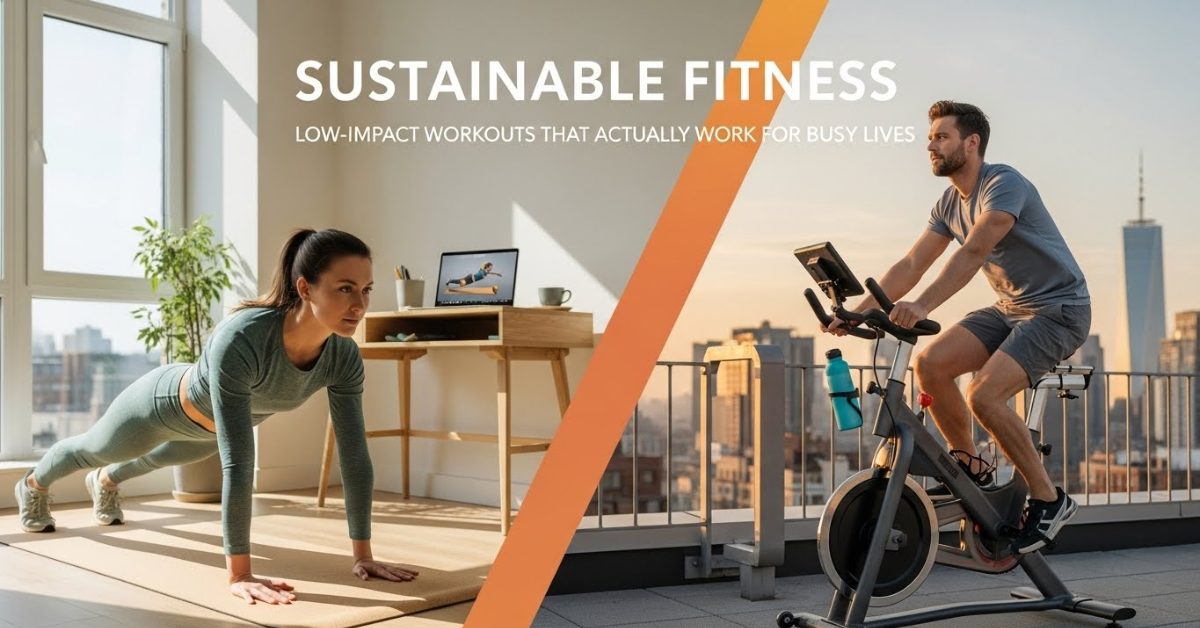
In today’s fast-paced world, staying fit often feels like another task added to an already overflowing schedule. Long office hours, family responsibilities, constant digital engagement, and mental fatigue leave very little time or energy for intense workout routines. As a result, many people abandon their fitness goals altogether, believing that effective exercise requires hours at the gym or extreme physical effort. This is where sustainable fitness and low-impact workouts come in as a realistic and long-term solution.
Sustainable fitness focuses on consistency, balance, and practicality rather than short-term intensity. Low-impact workouts are particularly ideal for busy individuals who want to stay active without placing excessive strain on their joints or disrupting their daily routines. These exercises are gentle yet effective, making them accessible for beginners, professionals, seniors, and anyone aiming to maintain steady progress without burnout.
What Is Sustainable Fitness?
Sustainable fitness is an approach that prioritizes long-term health over quick results. It promotes workouts that are realistic, adaptable, and easy to integrate into everyday life. Instead of pushing the body to exhaustion, sustainable fitness focuses on gradual improvement, injury prevention, and lifestyle consistency.
This approach helps individuals:
- Build strong habits
- Avoid overtraining
- Reduce exercise-related injuries
- Maintain motivation
- Balance fitness with personal life
It shifts the focus from extreme transformation to steady, healthy progress.
Understanding Low-Impact Workouts
Low-impact workouts are exercises that minimize stress on joints while still providing effective physical conditioning. Unlike high-impact exercises such as running or jumping, these movements keep at least one foot on the ground and reduce sudden pressure on the body.
These workouts are suitable for:
- Busy professionals
- Beginners
- Elderly individuals
- People recovering from injury
- Anyone seeking gentle exercise options
Low-impact does not mean low results. With consistency and proper form, these workouts deliver excellent outcomes for strength, endurance, flexibility, and overall fitness.
Why Low-Impact Workouts Are Perfect for Busy Lives
Time Efficiency
Many low-impact workouts can be completed in 20 to 30 minutes, making them ideal for people with tight schedules.
Reduced Recovery Time
Since these exercises are less intense, your body recovers faster, allowing for frequent sessions without excessive soreness.
Less Injury Risk
Low-impact workouts reduce pressure on knees, hips, and ankles, lowering the chance of exercise-related injuries.
Sustainable Motivation
Gentle routines are easier to maintain long-term, building consistency rather than exhaustion.
Key Benefits of Sustainable Low-Impact Fitness
- Improves cardiovascular health
- Enhances flexibility and mobility
- Strengthens muscles without excessive strain
- Supports mental clarity and stress reduction
- Boosts energy levels
- Promotes weight management
- Improves posture and balance
These benefits contribute to both physical and mental wellbeing, making fitness a lifestyle habit rather than a temporary challenge.
Best Low-Impact Workouts for Busy People
1. Walking
Walking is one of the most underrated forms of exercise. It requires no equipment and can be easily incorporated into daily life.
Benefits include:
- Improves heart health
- Increases metabolism
- Reduces stress
- Enhances circulation
A brisk 30-minute walk daily can significantly improve overall fitness.
2. Yoga
Yoga combines movement, breath control, and mindfulness. It strengthens muscles while enhancing flexibility and relaxation.
Benefits:
- Reduces stress and anxiety
- Improves balance
- Increases muscle tone
- Enhances mobility
Short yoga sessions can be done at home, before work, or even during breaks.
3. Pilates
Pilates focuses on core strength, posture control, and muscle stability. It is especially beneficial for people with back pain or poor posture due to desk work.
It helps:
- Strengthen core muscles
- Improve spinal alignment
- Increase flexibility
- Enhance muscle control
4. Cycling (Indoor or Outdoor)
Cycling provides full lower body conditioning without placing stress on joints. Even short cycling sessions improve stamina and cardiovascular performance.
5. Swimming
Swimming is a full-body workout that strengthens muscles while being extremely gentle on joints. It supports heart health and increases overall endurance.
6. Resistance Band Exercises
Resistance bands offer low-impact strength training suitable for home workouts. They help build muscle tone and improve joint stability.
7. Light Strength Training
Using light weights or bodyweight exercises enhances muscle strength without extreme stress. These exercises include squats, wall push-ups, and seated stretches.
How to Build a Sustainable Fitness Routine
Start Small
Begin with manageable workout durations and gradually increase intensity.
Schedule Realistically
Choose a consistent time that fits your lifestyle, such as morning or evening sessions.
Focus on Consistency
Even 15 to 30 minutes daily is more valuable than occasional long workouts.
Combine Movement with Daily Tasks
Use stairs, walk while on calls, stretch during breaks, and stay active throughout the day.
Sustainable Fitness for Different Lifestyles
Office Workers
Desk-based professionals benefit from stretching, walking breaks, chair exercises, and gentle yoga.
Parents
Home-based workouts and short walking sessions work well within busy family schedules.
Seniors
Low-impact routines improve mobility, joint health, and balance without strain.
Remote Workers
Short movement breaks and scheduled home exercise sessions reduce sedentary behavior.
The Role of Mindset in Sustainable Fitness
A positive mindset plays a crucial role in maintaining consistency. Viewing exercise as self-care rather than obligation helps develop long-term commitment.
Key mindset changes include:
- Focusing on progress, not perfection
- Celebrating small wins
- Accepting flexibility in schedule
- Prioritizing overall wellbeing
Nutrition and Sustainable Fitness
Proper nutrition supports workout performance and recovery. Balanced meals with adequate proteins, fibers, and healthy fats help fuel low-impact exercises efficiently.
Hydration also plays a crucial role in maintaining energy and supporting muscle function.
Wellness Integration for Better Results
Combining fitness with healthy sleep habits, stress management, and mindful breathing enhances long-term effectiveness. Sustainable fitness is most powerful when it aligns with overall lifestyle wellness.
Common Myths About Low-Impact Fitness
Myth 1: Low-impact workouts are ineffective
Reality: Consistency makes them highly effective for endurance and strength.
Myth 2: Only intense workouts burn fat
Reality: Low-impact workouts promote steady fat burn and metabolic improvement.
Myth 3: They are only for beginners
Reality: They are suitable for all fitness levels.
How Technology Supports Sustainable Fitness
Fitness apps, step trackers, and wearable devices help track progress and encourage accountability. These tools help busy individuals stay motivated and consistent without overwhelming routines.
Creating a Weekly Sustainable Fitness Plan
Examples:
- 3 days of walking
- 2 days of yoga
- 1 day of resistance training
- 1 day of stretching
This balanced schedule prevents monotony and promotes full-body conditioning.
Long-Term Impact of Sustainable Low-Impact Fitness
Maintaining a sustainable workout routine supports:
- Strong joints and muscles
- Enhanced mobility with age
- Reduced risk of chronic diseases
- Improved mental clarity
- Better energy balance
- Healthy weight management
These long-term benefits ensure that fitness remains achievable and enjoyable rather than exhausting.
Why Busy Lives Need Sustainable Fitness
Modern lifestyle pressures make extreme workout plans unrealistic. Sustainable fitness provides a practical alternative that fits into daily schedules while producing meaningful results. It allows individuals to stay healthy without sacrificing work, family, or personal time.
This approach encourages lifelong movement habits instead of temporary motivation bursts.
Conclusion
Sustainable fitness offers a realistic, effective way for busy individuals to stay healthy without overwhelming their daily routine. Low-impact workouts provide a gentle yet powerful solution that promotes long-term physical and mental wellbeing. By focusing on consistency, balance, and mindful movement, anyone can build a fitness lifestyle that lasts.
Instead of striving for perfection, sustainable fitness encourages progress, patience, and self-care. Whether you have 15 minutes or an hour, choosing low-impact exercises ensures that fitness becomes a sustainable habit, not a burden. In a world driven by speed and stress, slow and steady movement truly works best for lasting health.